
Uncategorized
Rainy Season Leather Care: Keep Your Leather Shoes Looking New
Jul
Rainy days may bring relief from the heat, but they can be tough on genuine leather footwear. Unlike synthetic materials, original leather is a natural material that requires proper care, especially during the monsoon season. Excess moisture, mud, and humidity can damage the leather, cause unpleasant odors, and shorten the life of your favorite pair.
The good news? With a few simple habits and smart care techniques, you can protect your leather shoes and enjoy them for years to come.
Why Rain Is Harmful to Leather
Leather contains natural fibers and oils that keep it soft, flexible, and durable. When exposed to excessive water, these oils gradually wash away, causing the leather to:
- Become stiff and dry
- Develop cracks over time
- Lose its natural shine
- Fade in color
- Develop mold or mildew due to trapped moisture
- Produce unpleasant odors
Prevention is always easier—and cheaper—than restoration.
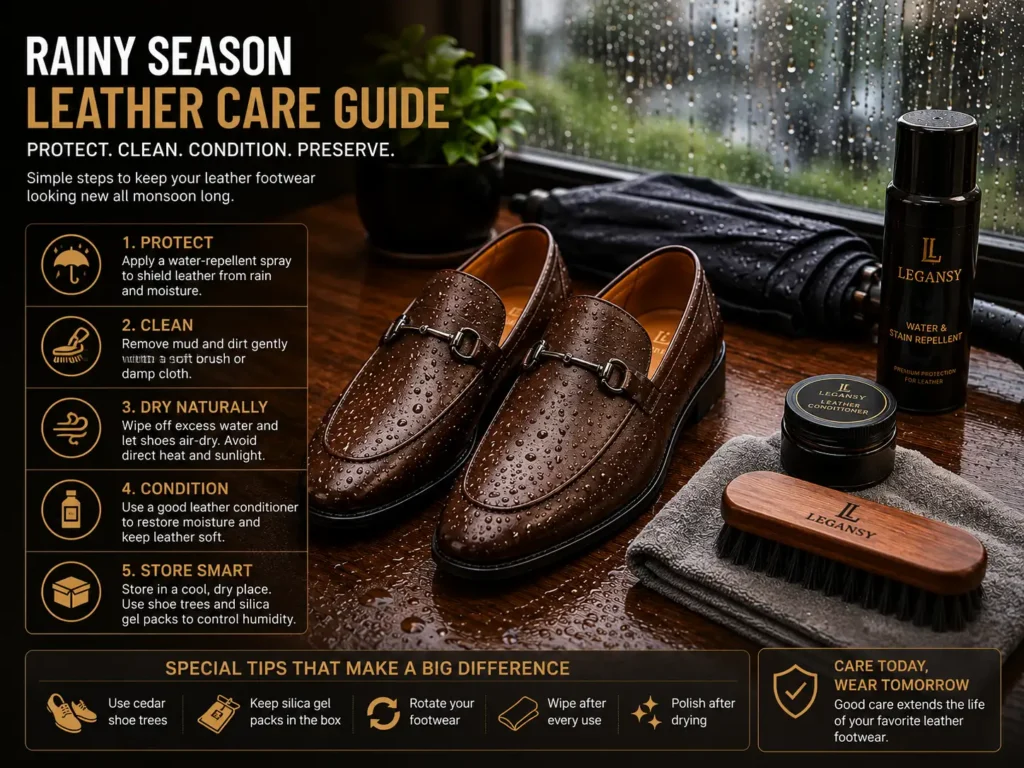
1. Apply a Water-Repellent Protector Before the Rainy Season
One of the best investments for leather footwear is a high-quality water-repellent spray or leather protector.
It creates an invisible protective barrier that helps repel water without preventing the leather from breathing.
Pro Tip: Reapply the protector every 3–4 weeks during the rainy season or after heavy exposure to rain.
2. Avoid Wearing Leather Shoes During Heavy Rain
Even premium leather is not designed to withstand prolonged exposure to water.
If heavy rain is expected:
- Wear waterproof footwear or sandals while commuting.
- Carry your leather shoes in a shoe bag and change into them once you reach your destination.
This simple habit can significantly extend the life of your shoes.
3. Never Dry Leather Shoes Under Direct Heat
If your shoes get wet, resist the temptation to place them:
- Under direct sunlight
- Near a heater
- In front of a hair dryer
- On top of a radiator
Excessive heat removes the leather’s natural moisture, making it brittle and prone to cracking.
Instead:
- Wipe off excess water with a soft microfiber cloth.
- Stuff the shoes with newspaper or plain tissue paper to absorb moisture and maintain their shape.
- Let them air-dry naturally in a well-ventilated room.
4. Clean Mud Immediately
Mud contains dirt, sand, and tiny abrasive particles that can scratch leather.
Allow the mud to dry slightly, then gently remove it using:
- A soft horsehair brush
- A microfiber cloth
Never scrub wet mud directly onto the leather.
5. Condition Your Leather Regularly
Rain and humidity gradually strip away the leather’s natural oils.
A quality leather conditioner:
- Restores moisture
- Prevents cracking
- Keeps the leather soft
- Enhances the natural finish
Condition your shoes every 4–6 weeks during the rainy season or more frequently if they are exposed to water.
6. Rotate Your Footwear
Avoid wearing the same leather shoes every day.
Leather needs time to release absorbed moisture from both rain and perspiration.
Ideally, allow each pair to rest for at least 24 hours before wearing it again.
7. Store Shoes Properly
Humidity is one of leather’s biggest enemies.
Store your shoes:
- In a cool, dry place
- Away from direct sunlight
- With cedar shoe trees if possible
- Inside breathable cotton dust bags rather than plastic bags
This helps prevent mold, odors, and deformation.
Special Tips & Tricks That Make Leather Care Easier
✔ Use Cedar Shoe Trees
Cedar shoe trees absorb excess moisture, maintain the shoe’s shape, and naturally reduce odors. They’re one of the best long-term investments for leather footwear.
✔ Keep Silica Gel Packs Inside the Shoe Box
Don’t throw away those small silica gel packets that come with new products.
Place a few inside your shoe box to absorb excess humidity and help prevent mold during the rainy season.
✔ Wipe Shoes Before Storing
Even if your shoes don’t appear dirty, wipe them with a dry microfiber cloth after every use. This removes invisible moisture, dust, and sweat that can gradually damage the leather.
✔ Polish After Drying
If your shoes become wet, wait until they are completely dry before applying shoe cream or polish.
Polishing damp leather traps moisture inside, which can eventually lead to mold and discoloration.
✔ Remove Odors Naturally
If your shoes develop a damp smell:
- Place a small pouch of activated charcoal or baking soda (wrapped in breathable fabric) inside the shoes overnight.
- Remove it before wearing.
This naturally absorbs moisture and neutralizes odors without damaging the leather.
✔ Use a Soft Brush Instead of Wet Cloths
For routine cleaning, a soft horsehair brush removes dust more effectively than repeatedly wiping the leather with a damp cloth.
Less moisture means healthier leather.
Common Mistakes to Avoid
Many people unintentionally shorten the lifespan of their leather shoes by making a few avoidable mistakes:
- Wearing leather shoes in heavy rain whenever possible.
- Drying wet shoes with direct heat or strong sunlight.
- Storing damp shoes inside closed cabinets.
- Skipping leather conditioning for months.
- Using harsh detergents or household cleaners on leather.
- Wearing the same pair every day without allowing it to dry.
Avoiding these habits can dramatically increase the longevity of your footwear.
Final Thoughts
Original leather footwear is an investment in quality, comfort, and timeless style. While the rainy season presents extra challenges, proper care can keep your shoes looking elegant for years.
A few minutes of maintenance after each wear, combined with regular conditioning and smart storage, is all it takes to protect your investment. Small habits—like using shoe trees, keeping silica gel packs in the box, and letting wet shoes air-dry naturally—can make a remarkable difference.
At Legansy, we believe premium leather deserves premium care. Treat your leather footwear with the attention it deserves, and it will reward you with lasting comfort, durability, and a sophisticated look through every season—even the rainiest ones.
